
Each student would receive tutoring services in September through May. This was still well below what it would cost the districts to provide the services themselves, so two districts agreed to continue the program. Chang agreed to delay charging the fee until the next school year started in September 2015. Chang was a bit daunted by Duncan’s generosity but immediately went to work.
- Bold City Consulting performs $3,150 of services on account.
- In order to be identified as an accounting transaction, the transaction must relate to the business and involve a monetary amount.
- Adhering to the principle of debits and credits helps to ensure accurate recording of financial transactions and maintain the integrity of a company’s financial statements.
- We’ll also dive into how transactions work and why they play such a vital role in financial reporting.
- Since these transactions have a monetary effect, recording and presenting them is crucial.
- The continued equilibrium of the accounting equation does exist here although it is less obvious.
Step 5: Determine the debit and credit amounts
How can a non-profit recognize a revenue if the recipients of its services don’t pay for those services? In non-profit accounting, we address this problem by simply drawing a parallel between donations and payments for service. Donors who support a non-profit are, in effect, paying that non-profit to pursue its mission. Donors may not benefit directly from their contribution, but they benefit indirectly through tax benefits and a feeling of generosity. Those indirect benefits are substantial enough to support the accrual concept in this context.
Step 10: Analyze the financial statements
For example, the cash payment of rent for the accounting period, is clearly going to affect the cash account and the rent expense account. Accounting transaction analysis is the process involved of the first step in the accounting cycle which is to identify and analyze bookkeeping transactions. To properly record, or journalize, transactions in the general journal, it is helpful to complete a five-step process.
What are Closing Entries in Accounting? Accounting Student Guide

Rochester, like many of its peers, allows its retired city workers to remain on its health insurance plan. Moreover, it pays most of the insurance premiums Outsource Invoicing for those retirees and for their families. Many thousands of retired City workers are expected to take advantage of this benefit for many years to come. HighRadius stands out as a challenger by delivering practical, results-driven AI for Record-to-Report (R2R) processes. On track for 90% automation by 2027, HighRadius is driving toward full finance autonomy.
How to achieve a 40% increase in close productivity?
- Identify which accounts the transaction if going to affect.
- Note that the equipment is a non-current asset because Treehouse expects to use it for several years.
- After the adjusting entries have been passed and posted to respective ledger accounts, the unadjusted trial balance needs to be corrected to show the impact of these adjustments.
- Crediting an account usually represents an increase in liabilities and revenues and a decrease in assets and expenses.
- After this first recording for depreciation expense, the value of the audiology equipment reflected on Treehouse’s balance sheet will be $18,250, or ($20,000 – $1,750).
Companies must record this transaction as it is crucial in presenting a fair view in the financial statements. Usually, companies use the following journal entries to record the accounting transaction as below. Generally, all companies incur accounting transactions regularly. Depending on the underlying activity, the results can be direct or indirect.
Double-Entry Bookkeeping
- Step 4 An increase in the asset Accounts Receivable is a debit; an increase in the revenue Service Revenue is a credit.
- Like with salaries and pre-paid expenses, it’s not always clear when and how those assets are “used up.” Some of that use is normal wear and tear.
- As we can see by this entry, more than two accounts may be used in an entry.
- The income statement would see an increase to revenues, changing net income (loss).
- For most outsiders, these statements may look straightforward.
- Each account can identified with an account type, either assets, liabilities, equity, revenue or expenses.
As you can see, debits and credits do the opposite of each other. Therefore, when you use the double-entry method, for every debit you have, there will be a corresponding credit equal to the same amount, and vice versa. This keeps your accounting equation in balance, so you know that if it’s not balanced, then you’ve made a mistake in your bookkeeping.
Chang had also worked really hard in the initial month and submitted a grant proposal to the McNamara Foundation. After an intensive vetting transaction analysis in accounting process, she received the news that the Foundation would support PASS efforts in closing the achievement gap. She received a check from the foundation in April for $25,000. The foundation did not impose any restrictions on the grant. There are many other methods to calculate and allocate depreciation expenses, including the accelerated method, declining balance, sum-of-the-years method, and others. Different assumptions can produce rather different estimates and allocations of depreciation expenses.

To deliver its services, Treehouse must use up some portion of its building, vehicles, audiology equipment, and other capital items. Like with salaries and pre-paid expenses, it’s not always clear when and how those assets are “used up.” Some of that use is normal wear and tear. Some of it might happen if the asset bears a particularly heavy workload. Some capital items might be largely out of use, but they will lose value because each year that goes by, they’ll become harder for Treehouse to sell should they choose to liquidate them. Treehouse’s mission demands that it focus most of its efforts on delivering services.
- Exhibit 8 reports forecasted monthly revenues for FY 2017.
- After shopping around, she decided to purchase a minivan for $35,000.
- The balance sheet would experience an increase in assets and an increase in liabilities.
- Investments the organization intends to hold less than a year that have a clear market price and can be easily liquidated are known as marketable securities.
- Whether you want to build a solid foundation or refresh your knowledge, we’ve got you covered.
- Services also require equipment, certifications, and other assets where it’s not always what it means to “use” that asset.
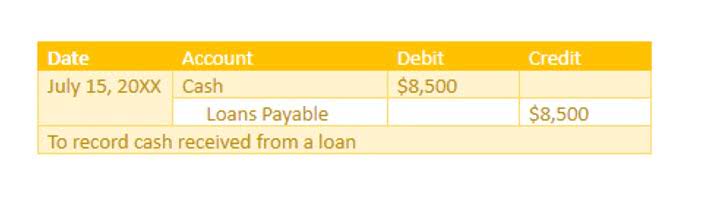
She hired five part-time tutors at $15 per hour, for 80 hours each per month, from September 1 to assets = liabilities + equity May 31. To keep costs down, she decided she would continue to tutor while running the program. She also decided that the organization’s most pressing need, particularly with new tutors on board, was transportation. After shopping around, she decided to purchase a minivan for $35,000. She made a $5,000 down payment and took out a five-year loan at 2.5% interest to finance the rest. Monthly payments of $532 were due at the beginning of each month, starting on September 1 (see Exhibit 2).

At the moment, the GAAP produced by the FASB and GASB do not specify a uniform chart of accounts, so account titles and definitions will vary across organizations. Some state governments require non-profits and governments to follow such a chart, but for the most part, public organizations are free to define their chart of accounts on their own. Because the accounting system records the growing expense as the employee works, that increases the wages expense and wages payable as the work is done. When payment is made cash decreases and so does wages payable that has been increased all along. This accounting transactions quiz is one of many of our online quizzes which are used to test your knowledge of double entry bookkeeping, discover another at the links below.